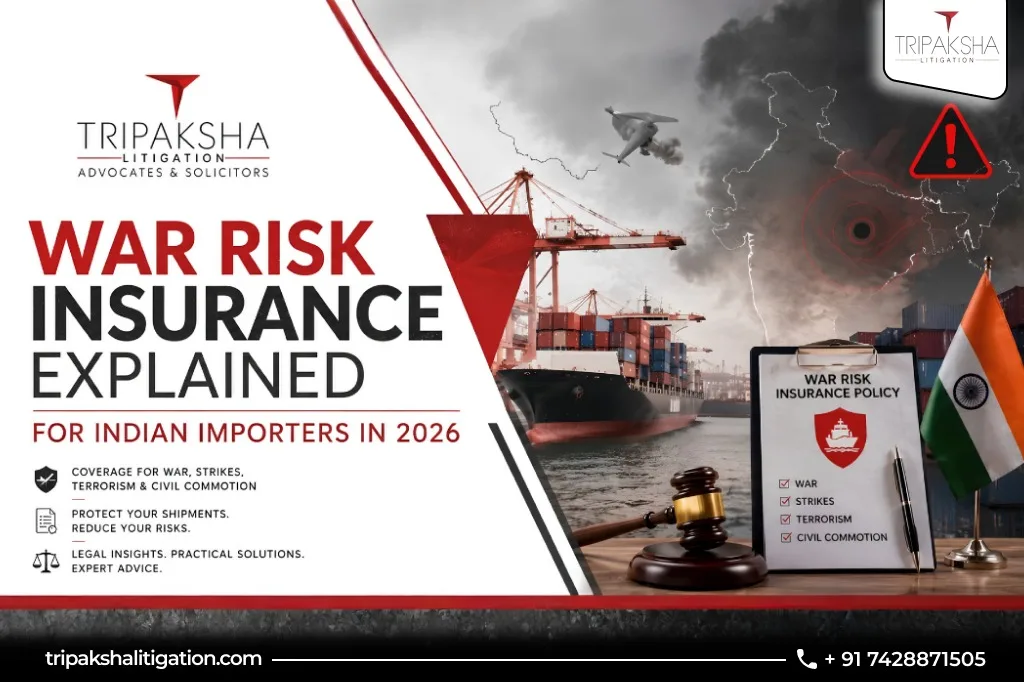
How Indian importers can protect cargo from war, conflict, and geopolitical disruptions.
NEW DELHI: Global trade in 2026 continues to face unprecedented uncertainty. Armed conflicts, attacks on commercial vessels, geopolitical tensions, sanctions, and disruptions along major shipping routes have significantly increased risks for businesses engaged in international trade.
Indian importers, who rely heavily on global supply chains for raw materials, machinery, electronics, chemicals, and consumer goods, are increasingly encountering terms such as “war risk premium” and “war risk insurance.”
Many businesses assume that a standard marine cargo insurance policy will cover all possible losses during transit. However, war-related incidents are generally excluded from ordinary cargo insurance policies. This is where war risk insurance becomes important. It provides protection against losses arising from war, armed conflict, hostile acts, and certain forms of political violence that can affect cargo during international transportation.
This article explains what war risk insurance is, how it works, what it covers, and why Indian importers should consider it in 2026.
What Is War Risk Insurance?
War risk insurance is a specialized insurance cover designed to protect businesses against losses arising from war-related events and political violence. It is usually offered as an extension to a marine cargo insurance policy or as a separate coverage depending on the nature of the shipment and the insurer’s underwriting guidelines.
Standard marine cargo insurance generally covers risks such as accidental damage, theft, fire, collision, sinking, and natural disasters. However, losses caused by war, invasion, armed conflict, rebellion, terrorism, seizure by authorities, and similar events are often excluded. War risk insurance fills this gap by providing coverage for these specific threats.
For Indian importers, this coverage can be particularly valuable when importing goods from regions experiencing instability or when shipments pass through high-risk maritime routes.
Why War Risk Insurance Matters in 2026
Key Global Developments
The global shipping industry has witnessed frequent disruptions in recent years. Attacks on commercial vessels, regional military conflicts, sanctions regimes, and geopolitical rivalries have increased uncertainty across several important trade corridors.
Shipping companies have been forced to reroute vessels, increase security measures, and impose additional war risk surcharges. Insurance premiums have also risen in response to growing risks.
Impact on Indian Importers
These developments directly affect Indian businesses by increasing transportation costs, causing shipment delays, and exposing cargo to greater risks during transit. A single hostile incident can result in substantial financial losses if adequate insurance protection is not in place.
War risk insurance helps importers manage these uncertainties and provides financial protection when geopolitical events disrupt international trade.
What Risks Does War Risk Insurance Cover?
Coverage varies from policy to policy, but war risk insurance generally includes protection against the following events.
- War and Armed Conflict: Coverage may apply to losses caused by war, military operations, invasions, and armed hostilities.
- Missile and Drone Attacks: Certain policies cover damage arising from missile strikes, drone attacks, and similar conflict-related incidents.
- Acts of Hostility: Protection may extend to losses caused by hostile actions of governments, armed groups, or militant organizations.
- Piracy and Maritime Threats: Depending on the policy, piracy and related maritime security risks may be covered.
- Seizure or Detention of Cargo: Compensation may be available if cargo is seized, captured, detained, or confiscated due to conflict-related events.
- Civil War and Insurrection: Coverage may include losses arising from civil war, rebellion, revolution, or insurrection.
- Terrorism-Related Risks: Some policies cover terrorism-related losses, while others require separate coverage.
What Is Usually Not Covered?
War Risk Insurance does not cover every loss occurring during a conflict.
Common exclusions include:
- Commercial delays
- Loss of market opportunities
- Exchange rate fluctuations
- Ordinary cargo damage
- Improper packing
- Inherent vice of goods
- Sanctions violations
- Fraudulent claims
Importers must carefully review policy wording before assuming coverage exists.
Legal Framework Governing War Risk Insurance
Marine Insurance Act, 1963: The principal legislation governing marine insurance in India is the Marine Insurance Act, 1963.
Important provisions include:
Section 3: Defines marine insurance and its scope.
Section 4: Permits insurance against marine losses incidental to marine adventure.
Section 55: Deals with partial losses.
Section 57: Provides for actual total loss.
Section 60: Explains constructive total loss.
Section 78: Recognises the insurer’s right of subrogation after settlement of claims.
Although the Act governs marine insurance generally, war risks are usually covered through separate contractual clauses.
Indian Contract Act, 1872: Insurance contracts are governed by principles relating to:
- Offer and acceptance
- Good faith
- Disclosure obligations
- Breach of contract
- Interpretation of policy terms
Insurance Act, 1938: Regulates insurance business operations in India.
IRDAI Regulations: The Insurance Regulatory and Development Authority of India (IRDAI) regulates insurers and insurance products offered within India.
Who Needs War Risk Insurance?
- Importers Sourcing From High-Risk Regions: Businesses importing goods from politically unstable regions face elevated risks and should consider additional protection.
- Businesses Using Vulnerable Shipping Routes: Cargo passing through conflict-prone maritime corridors may require war risk coverage.
- Importers of High-Value Cargo: Companies importing expensive machinery, electronics, industrial equipment, and specialized products may face significant financial exposure.
- Government and Defence Suppliers: Organizations dealing with strategic or defence-related imports often require comprehensive risk management measures.
- Energy, Chemicals, and Industrial Importers: These sectors frequently rely on international shipments and may face substantial losses if cargo is disrupted by geopolitical events.
War Risk Insurance vs Marine Cargo Insurance
| Feature | Marine Cargo Insurance | War Risk Insurance |
| Cargo Damage | Covered | Limited Coverage |
| Theft | Covered | Limited Coverage |
| Fire and Accidents | Covered | Generally Not Primary Cover |
| War-Related Losses | Excluded | Covered |
| Missile or Drone Attacks | Excluded | Covered |
| Political Violence | Usually Excluded | Covered |
| Seizure During Conflict | Excluded | Covered |
Key Shipping Routes Creating Concern in 2026
- Red Sea Route: One of the most closely monitored trade corridors due to ongoing security concerns affecting commercial shipping.
- Gulf Region: Regional tensions can affect vessel movement and increase insurance costs.
- Black Sea Region: Political and military developments continue to influence shipping activities.
- East Asian Maritime Corridors: Strategic competition and regional disputes may impact supply chain stability.
- Strategic Chokepoints: Critical maritime passages remain vulnerable to disruptions that can affect global trade flows.
Important Judicial Decisions
General Assurance Society Ltd. v. Chandmull Jain (1966): The Supreme Court of India held that insurance contracts must be interpreted according to their terms and conditions. Courts cannot rewrite insurance policies.
This principle remains important in war risk disputes because coverage depends heavily upon the exact wording of the policy.
United India Insurance Co. Ltd. v. Harchand Rai Chandan Lal (2004): The Supreme Court reiterated that insurance contracts must be strictly construed and claims cannot be granted beyond the policy language.
Export Credit Guarantee Corporation of India Ltd. v. Garg Sons International (2013): The Supreme Court emphasised that commercial insurance policies are governed primarily by contractual terms agreed between the parties.
Oriental Insurance Co. Ltd. v. Sony Cheriyan (1999): The Supreme Court held that an insured cannot claim benefits beyond the scope of the policy.
These judgments collectively reinforce a critical lesson for importers: always read the policy wording carefully before relying upon war risk coverage.
How Much Does War Risk Insurance Cost?
The cost of war risk insurance varies depending on several factors.
Factors Affecting Premiums
- Value of cargo.
- Type of goods being transported.
- Country of origin and destination.
- Shipping route.
- Current geopolitical conditions.
- Vessel classification and risk profile.
- Duration of exposure to high-risk areas.
Premiums may increase significantly during periods of heightened conflict.
Important Clauses Indian Importers Must Review
- Institute War Clauses: These clauses define the scope of war-related coverage and exclusions.
- Institute Cargo Clauses: Importers should understand how standard cargo insurance interacts with war risk coverage.
- Exclusions and Limitations: Policy exclusions should be carefully reviewed to avoid unexpected claim disputes.
- Territorial Restrictions: Certain regions may be specifically excluded from coverage.
- Cancellation Clauses: Insurers may reserve the right to modify or cancel coverage under specified circumstances.
- Notice Requirements: Failure to comply with notification obligations may affect claim eligibility.
Common Mistakes Made by Importers
- Assuming Standard Cargo Insurance Covers War Risks: Many businesses discover coverage gaps only after a loss occurs.
- Ignoring Route-Specific Risks: The route may create risks even when the origin and destination countries appear stable.
- Underinsuring Cargo: Inadequate coverage limits can result in significant uninsured losses.
- Not Reviewing Policy Exclusions: Exclusions often determine whether a claim succeeds or fails.
- Delayed Reporting of Incidents: Prompt reporting is critical for claim processing.
Practical Risk Management Tips for Indian Importers
Businesses should adopt a proactive approach toward geopolitical risk management. Conduct regular route assessments, monitor global developments, maintain proper shipment documentation, and work closely with experienced insurers, freight forwarders, and legal advisors.
Importers should also periodically review their insurance portfolio to ensure that coverage remains aligned with changing geopolitical realities and trade patterns.
Legal and Compliance Considerations
- International Sanctions: Importers must ensure compliance with applicable sanctions regimes and trade restrictions.
- Trade Restrictions: Changes in government policies can affect import transactions and insurance coverage.
- Contractual Risk Allocation: Import contracts should clearly allocate responsibility for war-related risks.
- Insurance Documentation Requirements: Accurate documentation plays a critical role in claim processing and regulatory compliance.
- Import Contract Clauses to Review: Force majeure provisions, insurance obligations, risk allocation clauses, and dispute resolution mechanisms should be carefully examined.
CONCLUSION
War risk insurance has evolved from a niche insurance product into an increasingly important component of international trade risk management. For Indian importers operating in a world shaped by geopolitical tensions, shipping disruptions, and regional conflicts, relying solely on standard marine cargo insurance may leave significant gaps in protection.
Before importing goods through sensitive regions or high-risk maritime corridors, businesses should carefully evaluate their exposure, review existing insurance arrangements, and seek professional advice where necessary. A well-structured war risk insurance policy can help safeguard cargo, protect cash flow, and ensure business continuity even during periods of global uncertainty.
FAQs
- Is War Risk Insurance Mandatory for Indian Importers?
No. However, it may be strongly recommended depending on the cargo, destination, and shipping route involved. - Does Marine Insurance Automatically Include War Risk Coverage?
Generally, no. War-related risks are usually excluded unless specifically covered through endorsements or separate policies. - Can War Risk Insurance Cover Goods Stored at Ports?
Coverage depends on the policy wording and the specific circumstances involved. - Are Red Sea Shipments Covered Under War Risk Policies?
They may be covered, but additional premiums and special conditions often apply. - How Are War Risk Premiums Calculated?
Premiums are based on cargo value, route risk, vessel exposure, geopolitical conditions, and insurer assessment.