
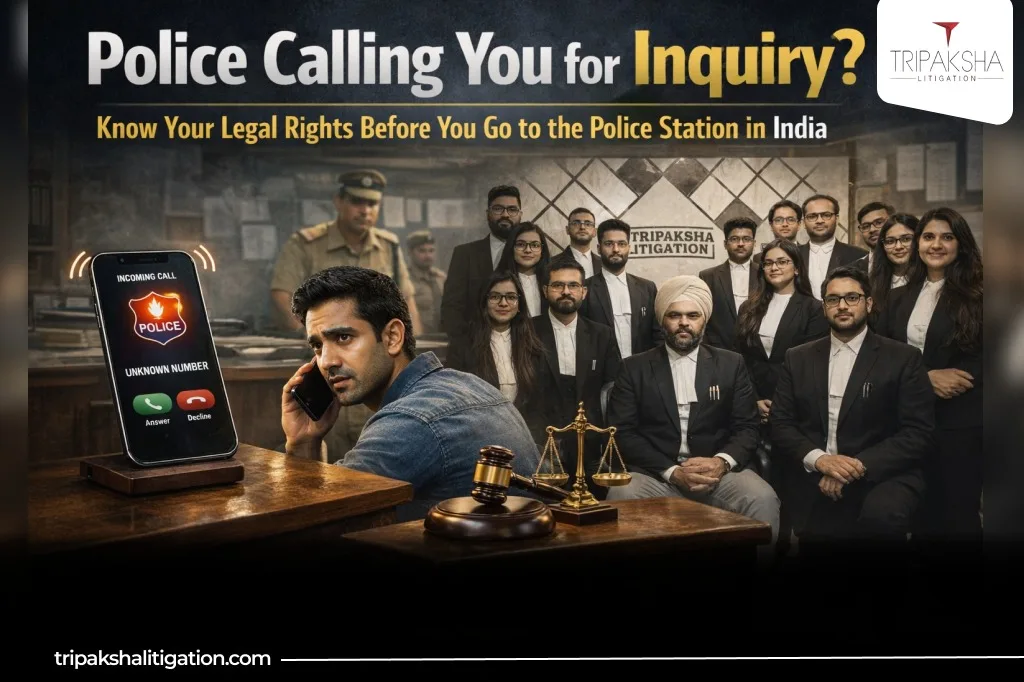
A police inquiry does not mean arrest, but lack of legal awareness can turn a simple call into serious trouble. This article explains your exact legal rights under Indian law and Supreme Court rulings, in the simplest possible language.
NEW DELHI: In India, a call from the police asking you to “come for inquiry” is enough to create fear and anxiety. Many people immediately assume that once the police call them, arrest is fixed. This belief is wrong and legally dangerous. An inquiry is not the same as arrest, and the law clearly limits what the police can do during an inquiry.
Unfortunately, most citizens do not know these limits, and that lack of awareness is often misused, especially in matrimonial disputes, family conflicts, business disagreements, and complaint-based cases.
A police inquiry usually means the police are trying to understand facts or verify a complaint. It does not mean that you are guilty. It does not mean that an FIR is already registered. It also does not automatically give the police the power to arrest you. Under Indian criminal law, police inquiries are mainly governed by Section 160 of the Code of Criminal Procedure. This section allows police to call a person only for the purpose of asking questions related to an investigation. It is meant for fact-finding, not punishment or pressure.
Many times, police inform people only through phone calls. Legally speaking, a phone call has no binding force. The law requires that if the police want to formally call someone, they should issue a written notice under Section 160 CrPC. An oral request on the phone is not a legal order. If you receive such a call, you are within your rights to politely ask for a written notice and to note down the name, rank, and police station of the officer calling you. Staying calm and procedural protects you far more than panic or arguments.
The biggest fear people have during inquiry is arrest. The law is very clear on this issue. Police cannot arrest a person just because they are called for inquiry or just because a complaint exists. The Supreme Court of India has repeatedly stated that arrest should be the last option, not the first step.
In the landmark case of Arnesh Kumar v. State of Bihar (2014), the Supreme Court made it clear that police officers cannot make automatic arrests, especially in offences punishable up to seven years. The Court held that arrest must be justified with valid reasons and proper application of mind, and not done mechanically.
This judgment came because of large-scale misuse of criminal laws, particularly in matrimonial disputes, where arrest was being used as a pressure tactic. However, the principle laid down by the Court applies to all similar cases. Arrest without necessity violates the fundamental right to life and personal liberty guaranteed under Article 21 of the Constitution.
Section 41 of the CrPC further protects citizens from arbitrary arrest. Under this section, police can arrest without a warrant only if there is credible material and if arrest is necessary to prevent further offence, prevent tampering with evidence, stop influencing witnesses, or stop the accused from absconding. If these conditions are not present, arrest is illegal. Police officers are required to record written reasons for arrest and must be ready to justify the arrest before a Magistrate. Failure to do so can result in legal consequences for the officer.
Another important protection comes from the Constitution itself. Under Article 20(3) of the Constitution of India:
“No person accused of an offence shall be compelled to be a witness against himself.”
This means you cannot be forced to confess or make statements that incriminate you. You have the right to remain silent on questions that may harm you legally. While basic details like your name or address may be asked, you cannot be pressured into giving explanations, admissions, or emotional statements.
Illegal detention during inquiry is also a serious issue. Police cannot make you sit at the police station for hours without formal arrest or legal justification. The Supreme Court, in D.K. Basu v. State of West Bengal, laid down strict guidelines for arrest and detention. These include the right to inform a family member or lawyer, proper documentation of detention, and medical examination. Violation of these guidelines is not a small irregularity; it is a violation of fundamental rights.
One of the biggest mistakes people make is going alone to the police station, believing that cooperation alone will solve everything. In reality, many cases worsen because people speak emotionally, make casual statements, or sign documents without understanding their consequences. It is always safer to inform a trusted person, keep records, and seek legal guidance at the earliest stage. Early legal assistance often prevents small issues from turning into criminal cases.
This becomes even more important in matrimonial and family-related complaints, where courts have acknowledged misuse of criminal law. The Supreme Court has repeatedly warned against using police machinery as a tool for harassment or forced settlements. False implications do not just affect the accused; they damage families, careers, mental health, and social reputation in ways that cannot be reversed even after acquittal.
The reality is simple: police power in India is not unlimited. It is controlled by the Constitution, statutes, and binding Supreme Court judgments. When citizens know their rights and act legally from the very first police interaction, the balance of power changes. The safest approach when facing a police inquiry is calm conduct, procedural awareness, and timely legal advice.
If the police call you for inquiry, do not panic, do not argue, and do not assume guilt. Follow the law, assert your rights respectfully, and take informed legal help as early as possible. In many cases, early legal guidance itself prevents harassment, illegal detention, and unnecessary criminal proceedings. In India’s legal system, awareness is not just protection—it is survival.
EXPLANATORY TABLE: LAWS, SECTIONS & COURT RULINGS REFERRED
| Law / Section / Case | What It Means in Simple Indian English | How It Protects You During Police Inquiry |
| Section 160 CrPC | Police can call a person only to ask questions related to an investigation. | Police can ask you to appear for inquiry, but only for fact-finding, not to threaten, detain, or arrest you. |
| Section 41 CrPC | Police can arrest without warrant only in specific situations with valid reasons. | Arrest is illegal unless police can show necessity like preventing evidence tampering or absconding. |
| Article 21 – Constitution of India | Guarantees right to life and personal liberty. | Arbitrary arrest or illegal detention violates your fundamental rights. |
| Article 20(3) – Constitution of India | “No person accused of an offence shall be compelled to be a witness against himself.” | You cannot be forced to confess or make statements that harm your own case. |
| Arnesh Kumar v. State of Bihar (2014) | Supreme Court ruled that arrest is not automatic and must be justified. | Police cannot arrest you just because a complaint or FIR exists. |
| D.K. Basu v. State of West Bengal | Supreme Court laid down mandatory arrest and detention safeguards. | Police must follow procedure, inform family, and record detention properly. |
| Section 41A CrPC | Police should issue notice of appearance instead of arrest in many cases. | You can be called for inquiry through notice without being arrested. |
| Station Diary Rules | Police must record movements, detention, and actions officially. | Prevents illegal detention and off-the-record harassment. |
| Judicial Oversight by Magistrate | Police actions are reviewed by courts. | Illegal arrest or inquiry abuse can be challenged legally. |
FAQs
Can police arrest me just because they called me for inquiry?
No. A police inquiry is only for asking questions. As per Supreme Court guidelines, arrest cannot be automatic and must be legally justified under Section 41 CrPC.
Is it compulsory to go to the police station if police call me on phone?
No. A phone call has no legal force. Police should issue a written notice under Section 160 or Section 41A CrPC. You may politely ask for the notice.
Can I remain silent during police inquiry?
Yes. Under Article 20(3) of the Constitution, you cannot be forced to give self-incriminating statements. Silence is a legal right, not non-cooperation.
How long can police keep me at the police station for inquiry?
Police cannot detain you indefinitely. Prolonged detention without arrest or legal grounds is illegal and violates Supreme Court guidelines.
Should I take a lawyer even at the inquiry stage?
Yes. Early legal guidance helps ensure your rights are protected and prevents casual statements from later being used against you.
LEGAL DISCLAIMER
This article is published for general legal awareness and educational purposes only. It does not constitute legal advice, solicitation, or a lawyer-client relationship. Laws and judicial interpretations may change over time, and their application depends on specific facts and circumstances. Readers are advised to seek professional legal consultation for their individual cases.