Legal Articles

Best Divorce Lawyer | Divorce Lawyer in Delhi | Divorce lawyer Contact number | Mutual Consent Divorce
Legal Articles

Foreign National Prisoners

Foreign national prisoners in India are entitled to fundamental legal protections, including fair treatment, access to legal representation, and safeguards against unlawful detention, regardless of their nationality. Their cases may involve additional requirements concerning consular communication, immigration status, deportation, and international treaties, including applicable provisions of the Vienna Convention on Consular Relations. Foreign nationals accused or convicted of offences remain subject to Indian criminal law and prison regulations. Authorities must also consider judicial orders, sentence completion, visa conditions, and applicable immigration procedures when deciding matters involving detention, release, or repatriation.

Foreign National Prisoners Read Post »

Legal Validity to Homosexual Marriages in India
Legal Articles

Legal Validity to Homosexual Marriages in India

Same-sex marriages are not currently legally recognised under India’s existing marriage laws. In its landmark 2023 judgment in Supriyo v. Union of India, the Supreme Court declined to extend marriage recognition to same-sex couples through judicial interpretation, leaving legislative changes to Parliament. However, consensual same-sex relationships between adults are legal following the Supreme Court’s 2018 decision in Navtej Singh Johar v. Union of India. The legal discussion surrounding same-sex marriage involves constitutional equality, dignity, personal liberty, family rights, and access to legal benefits available to married couples.

Legal Validity to Homosexual Marriages in India Read Post »

Legal Articles

Court Proceedings Must Not Be Used As A Weapon Of Harassment: Calcutta High Court

The Calcutta High Court emphasised that court proceedings must not be misused as a tool of harassment, intimidation, or personal revenge. The judicial process exists to resolve genuine legal disputes and protect rights, not to unnecessarily burden individuals through malicious or repetitive litigation. Courts may examine the nature of allegations, supporting evidence, conduct of the parties, and purpose behind initiating proceedings when assessing possible misuse of the legal system. The ruling reinforces the importance of fairness, judicial integrity, and preventing abuse of the process of law, while preserving access to justice for genuine grievances.

Court Proceedings Must Not Be Used As A Weapon Of Harassment: Calcutta High Court Read Post »

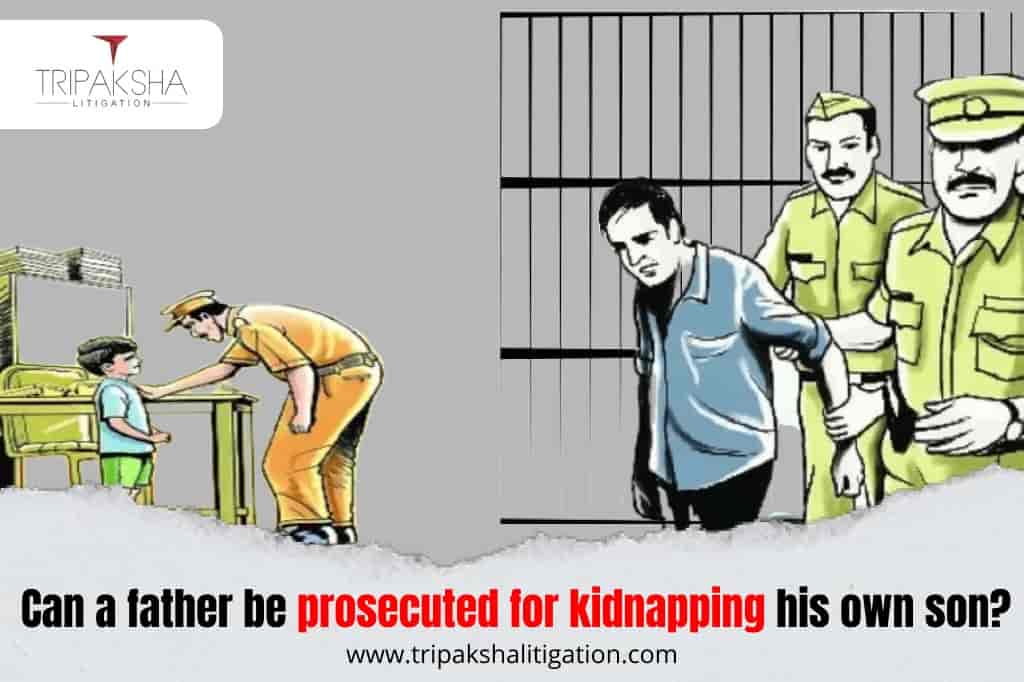
Can a father be prosecuted for kidnapping his own son
Legal Articles

Can a father be prosecuted for kidnapping his own son

A father’s removal of his own son does not automatically constitute kidnapping under Indian law, but biological parenthood alone does not provide unrestricted authority to take a child from another person’s lawful custody. Criminal liability depends on factors such as the child’s age, lawful guardianship, existing custody orders, the father’s legal authority, and the circumstances of removal. Courts distinguish between genuine custody disputes and conduct that satisfies the statutory ingredients of kidnapping. The child’s welfare and best interests remain central to custody decisions. Since 1 July 2024, kidnapping offences have been governed by the Bharatiya Nyaya Sanhita, 2023 (BNS).

Can a father be prosecuted for kidnapping his own son Read Post »

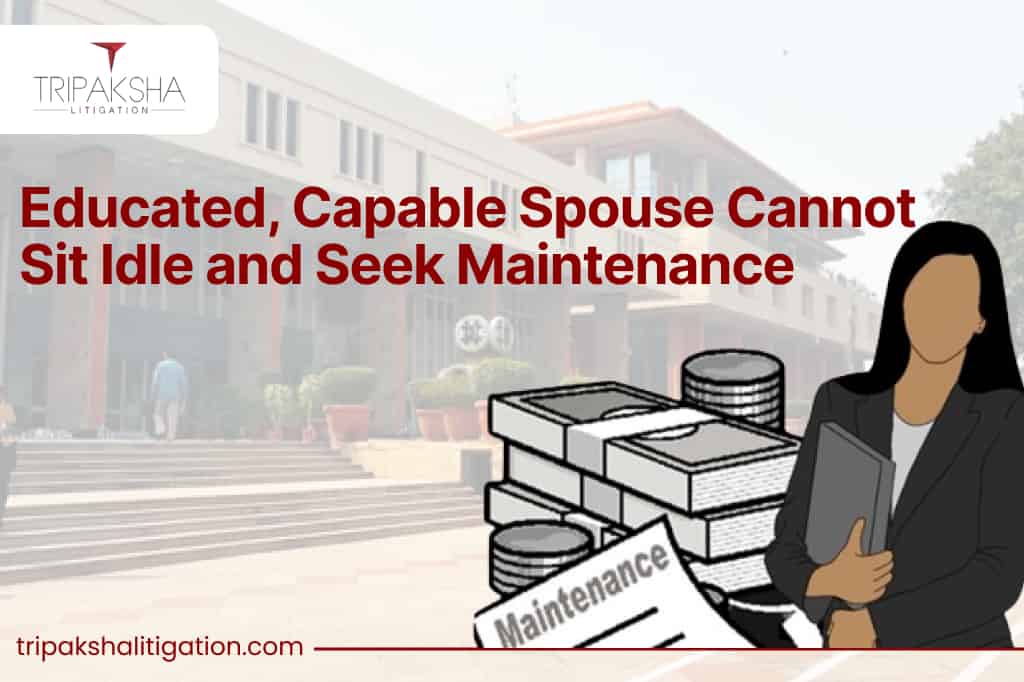
Educated, Capable Spouse cannot sit Idle and Seek Maintenance
Legal Articles

Educated, Capable Spouse cannot sit Idle and Seek Maintenance: Delhi High Court

An educated and capable spouse seeking maintenance may be expected to make reasonable efforts toward financial independence when circumstances permit. Indian courts can consider a spouse’s educational qualifications, employment history, earning capacity, actual income, health, and financial responsibilities while deciding maintenance claims. However, being educated or capable of working does not automatically disqualify a person from receiving maintenance. Courts must distinguish between potential earning capacity and actual financial circumstances, including genuine barriers to employment and caregiving responsibilities. The principle aims to ensure that maintenance decisions remain fair, reasonable, and based on the individual facts of each case.

Educated, Capable Spouse cannot sit Idle and Seek Maintenance: Delhi High Court Read Post »

An Explainer on “Dynamic Restrain” in Indian Courts
Legal Articles

An Explainer on “Dynamic Restrain” in Indian Courts

A dynamic injunction is a court order designed to prevent continuing online infringement, particularly when websites repeatedly change their domain names or URLs to evade earlier blocking orders. Indian courts have used this remedy in copyright and intellectual property disputes involving piracy websites and unauthorised distribution of protected content. Unlike a conventional injunction limited to specifically identified websites, a dynamic injunction may allow the blocking of mirror, redirect, or newly created websites connected to the same infringing activity, subject to judicial safeguards. The approach aims to provide effective protection for intellectual property rights while maintaining proportionality and preventing unnecessary restrictions on lawful online content.

An Explainer on “Dynamic Restrain” in Indian Courts Read Post »

Unravelling the Significance of Pari Materia
Legal Articles

Illuminating Legal Interpretation: Unravelling the Significance of Pari Materia

Pari materia is a Latin legal expression meaning “on the same subject matter.” In statutory interpretation, the principle allows courts to examine different laws or legal provisions dealing with similar subjects to understand legislative intent and resolve ambiguities. When statutes are considered in pari materia, their provisions may be interpreted together to promote consistency, harmony, and coherence within the legal framework. However, courts must also consider differences in statutory language, purpose, and context rather than assuming that similar laws always have identical meanings. The doctrine plays an important role in Indian jurisprudence by helping judges interpret related legislation accurately and consistently.

Illuminating Legal Interpretation: Unravelling the Significance of Pari Materia Read Post »

Women Entitled To Safe Legal Abortion Irrespective of Marital Status
Legal Articles

Women Entitled To Safe Legal Abortion Irrespective of Marital Status

The Supreme Court of India has affirmed that unmarried women cannot be denied access to lawful abortion solely because of their marital status. Under the Medical Termination of Pregnancy (MTP) Act, 1971, as amended, eligible women may seek termination of pregnancy within prescribed gestational limits and statutory conditions. The Court emphasised reproductive autonomy, bodily integrity, dignity, privacy, and equality, recognising that reproductive rights are not restricted to married women. The judgment also clarified that unmarried women may qualify under the relevant MTP Rules for termination between 20 and 24 weeks, subject to applicable medical and legal requirements.

Women Entitled To Safe Legal Abortion Irrespective of Marital Status Read Post »

What is cross-examination and re-examination according to the Indian Evidence Act
Legal Articles

What is cross-examination and re-examination according to the Indian Evidence Act?

Cross-examination and re-examination are important stages of witness testimony in Indian court proceedings. Cross-examination allows the opposing party to question a witness to test the accuracy, credibility, and reliability of their statements. Re-examination gives the party who originally called the witness an opportunity to clarify matters arising during cross-examination. These procedures help courts evaluate evidence, identify inconsistencies, and ensure a fair trial. Previously governed by the Indian Evidence Act, 1872, the examination of witnesses is now primarily regulated by the Bharatiya Sakshya Adhiniyam, 2023 (BSA), which came into force on 1 July 2024.

What is cross-examination and re-examination according to the Indian Evidence Act? Read Post »

Factors Determining Maintenance To Wife in India
Legal Articles

Factors Determining Maintenance To Wife in India

Maintenance awarded to a wife in India depends on several financial and personal circumstances rather than a fixed percentage of the husband’s income. Courts consider factors such as both spouses’ earnings, assets, earning capacity, reasonable living expenses, standard of living during marriage, financial liabilities, and responsibilities toward children or other dependants. The wife’s health, employment circumstances, and genuine financial needs may also influence the amount. Maintenance can be interim or final, depending on the proceedings and applicable law. The objective is to provide fair financial support while balancing the needs and resources of both parties.

Factors Determining Maintenance To Wife in India Read Post »

A Comprehensive Analysis of Section 353 of the Indian Penal Code
Legal Articles

A Comprehensive Analysis of Section 353 of the Indian Penal Code

Section 353 of the Indian Penal Code (IPC) addressed assault or use of criminal force against a public servant to prevent or deter them from performing their official duties. The provision applied when an accused intentionally used assault or criminal force in connection with the lawful discharge of public duties. Courts examined the nature of the conduct, intention of the accused, status of the public servant, and connection between the act and official duties when determining liability. Mere verbal disagreement or criticism did not automatically constitute this offence. Since 1 July 2024, the corresponding provision has been Section 132 of the Bharatiya Nyaya Sanhita, 2023 (BNS).

A Comprehensive Analysis of Section 353 of the Indian Penal Code Read Post »

Difference Between Section 354 and 509 of ipc
Legal Articles

Difference Between Section 354 and 509 of ipc

Sections 354 and 509 of the Indian Penal Code (IPC) addressed different forms of misconduct affecting a woman’s dignity and modesty. Section 354 dealt with assault or criminal force used against a woman with the intention or knowledge of outraging her modesty, while Section 509 covered words, gestures, sounds, or acts intended to insult a woman’s modesty, including intrusion upon her privacy. The key distinction was that Section 354 required assault or criminal force, whereas Section 509 could apply without physical contact. Since 1 July 2024, the corresponding offences have been governed by Sections 74 and 79 of the Bharatiya Nyaya Sanhita, 2023 (BNS).

Difference Between Section 354 and 509 of ipc Read Post »

Scroll to Top