
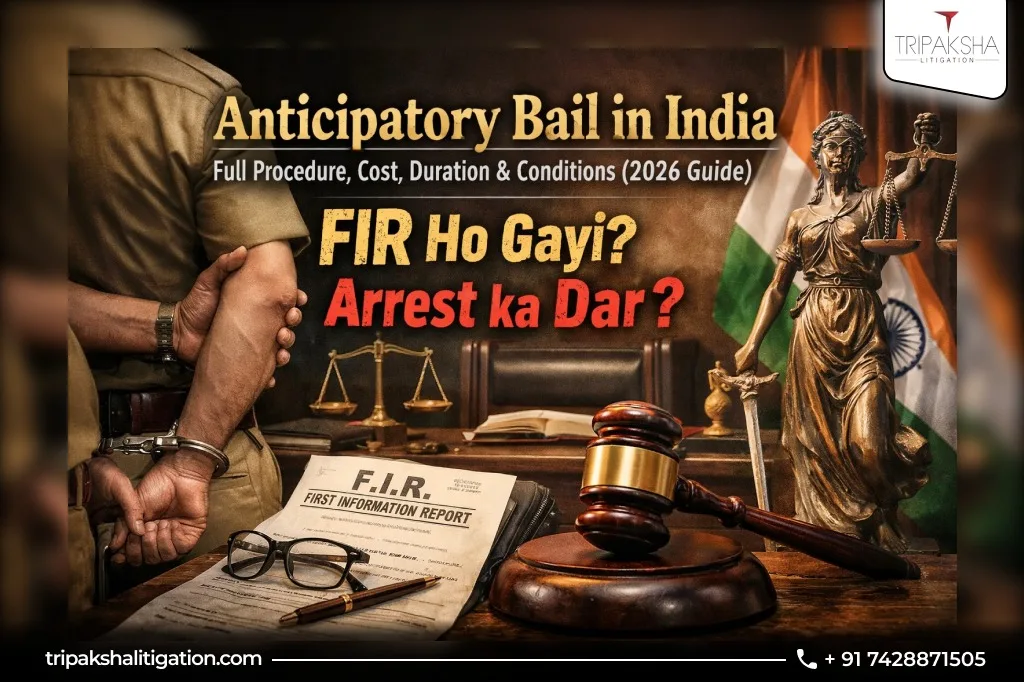
Step-by-Step Legal Roadmap to Secure Pre-Arrest Protection and Avoid Custody Risks
NEW DELHI: Most people don’t think about criminal law until it suddenly reaches their doorstep.
One call, one complaint, or sometimes just a message—“FIR ho gayi hai”—and everything changes. The first thought isn’t about trial or evidence. It’s simple: “Will I be arrested?”
And in India, that fear is not irrational. Arrest often comes before facts are properly tested. In many cases, especially matrimonial or financial disputes, the process itself becomes the punishment.
This is exactly where anticipatory bail comes in.
It is not about escaping the law. It is about protecting yourself from unnecessary custody while the law takes its course. The problem is—most people either don’t know about it, or they approach it too late, when damage is already done.
Legal Foundation of Anticipatory Bail
Anticipatory bail is governed by:
Section 438 CrPC
This provision allows a person to seek bail before arrest when they have reason to believe they may be arrested for a non-bailable offence.
Constitutional Backing
The concept is closely linked with:
- Article 21 of the Constitution of India – Protection of life and personal liberty
The Supreme Court has repeatedly held that personal liberty cannot be curtailed casually.
What Exactly is Anticipatory Bail? (Clear Understanding)
Anticipatory bail is a direction to release a person on bail in the event of arrest.
Key Legal Interpretation:
- It is not immunity from investigation
- It is protection from custody
- It ensures you remain free while the case proceeds
Landmark Judgment:
Gurbaksh Singh Sibbia vs State of Punjab (1980)
What the Supreme Court clarified:
- Anticipatory bail should not be granted mechanically
- It depends on facts of each case
- No rigid limitations should be imposed
This case still governs how courts interpret anticipatory bail today.
When Should You Apply?
The law says: “reasonable apprehension of arrest.”
But in practice, this includes:
- FIR already registered
- Complaint filed and police inquiry started
- Threat of arrest communicated indirectly
- Matrimonial disputes escalating
- Financial disputes turning criminal
Important Case Law:
Siddharam Satlingappa Mhetre vs State of Maharashtra (2010)
Court held:
- Arrest should be the last option
- Bail should be granted where custody is not necessary
Step-by-Step Procedure
Step 1: Legal Assessment
- Analyze FIR / complaint
- Identify sections invoked
- Check seriousness and arrest probability
Step 2: Drafting the Bail Application
This is where most cases are won or lost.
Key legal grounds:
- False implication
- Delay in FIR
- Civil dispute disguised as criminal
- No criminal antecedents
Step 3: Filing Before Court
- Sessions Court → Primary forum
- High Court → If rejected or urgent
Relevant Provision:
- Section 438 allows filing in both courts
Step 4: Interim Protection
Courts may grant temporary protection:
“Till next date, no coercive action shall be taken.”
This line often decides whether you sleep at home or in custody.
Step 5: Final Hearing
Court evaluates:
- Nature of accusation
- Role of accused
- Evidence strength
- Need for custodial interrogation
Step 6: Final Order
- Bail granted with conditions
- Bail rejected
- Interim relief extended
Cost of Anticipatory Bail
There is no fixed fee for anticipatory bail—it varies based on the situation and how the case is handled.
What Affects the Cost:
- Urgency (last-minute or emergency filings)
- Complexity of allegations
- Number of court hearings
- Experience and reputation of the lawyer
Additional Expenses to Keep in Mind:
- Drafting and paperwork
- Court-related documentation
- Travel and multiple appearances
The cost is less about a fixed number and more about how strategically and urgently the case is handled.
Duration: How Fast Can You Get Relief?
Timelines:
- Urgent: Same day / 1–3 days
- Regular: 3–10 days
- High Court: 1–3 weeks
Case Law Insight:
Sushila Aggarwal vs State (NCT of Delhi) (2020)
Supreme Court clarified:
- Anticipatory bail can continue till end of trial
- No automatic time limit
This judgment removed major uncertainty.
Conditions Imposed by Courts
Under Section 438(2) CrPC, courts impose conditions such as:
- Join investigation when required
- Do not tamper with evidence
- Do not threaten witnesses
- Do not leave India without permission
Case Law:
Sharad Kumar vs State of Karnataka (2018)
Court emphasized:
Conditions must be reasonable—not excessive or punitive.
Grounds for Grant of Anticipatory Bail
Courts typically grant bail when:
- Allegations appear exaggerated
- Dispute is civil in nature
- No criminal history
- FIR filed after delay
- No requirement of custodial interrogation
When Anticipatory Bail is Rejected
Courts deny bail in cases involving:
- Serious offences (rape, murder, etc.)
- Strong evidence
- Risk of absconding
- Possibility of influencing witnesses
Anticipatory bail is not meant for shielding serious offenders.
Interim Bail vs Final Anticipatory Bail
Interim Bail:
- Temporary protection
- Granted quickly
Final Bail:
- Long-term protection
- After detailed hearing
Practical Strategy:
Interim bail buys time. Final bail secures your position.
What Happens After Bail is Granted?
- Police cannot arrest you in that case
- You must cooperate with investigation
- Charge-sheet may still be filed
- Trial continues normally
Common Mistakes That Cost You Protection
- Waiting until police arrive
- Filing in wrong court
- Weak drafting without legal grounds
- Violating bail conditions
- Choosing inexperienced counsel
Reality:
Most bail rejections are not because law is strict—
they happen because strategy is weak.
Cancellation of Anticipatory Bail
Anticipatory bail is not permanent immunity. It can be cancelled if conditions are violated or if new facts emerge.
Common Grounds for Cancellation:
- Non-cooperation with investigation
- Threatening or influencing witnesses
- Tampering with evidence
- Violating court-imposed conditions
- Misuse of liberty granted by the court
How Cancellation Happens:
- Police or complainant files an application
- Court reviews conduct after bail was granted
- Bail can be revoked, leading to immediate arrest
Practical Insight:
Getting anticipatory bail is only half the battle—maintaining it requires strict compliance and disciplined conduct.
Strategic Legal Insight
Anticipatory bail is not just a legal application—it is a timing-based defence strategy.
- First impression before court matters
- Early action increases credibility
- Strong drafting reduces arrest risk
In many cases, he outcome is decided even before the hearing begins.
Conclusion: Control the Situation Before It Controls You
Anticipatory bail is not about escaping the law—it is about ensuring the law is not misused against you.
Most people act after damage begins.
Smart strategy is about acting before arrest happens.
Because once custody happens, your legal battle becomes reactive.
Before that, you still have control.
And in criminal law— control is everything.
FAQs
1. Can police still call me after anticipatory bail is granted?
Yes. Anticipatory bail protects you from arrest, not from investigation. You are legally required to cooperate when called.
2. How long does anticipatory bail remain valid?
In most cases, it continues till the end of trial unless the court specifically limits its duration.
3. Can anticipatory bail be cancelled after being granted?
Yes. If you violate conditions, do not cooperate, or misuse the relief, the court can cancel it and allow arrest.
4. What happens if anticipatory bail is rejected?
You can approach a higher court (usually the High Court) with stronger grounds or improved arguments.
5. Is anticipatory bail possible without an FIR?
Yes. If there is a genuine apprehension of arrest based on a complaint or ongoing dispute, you can still apply.