Legal Articles

How To File A Child Custody Case In Delhi Step-by-step Guide
Legal Articles

How To File A Child Custody Case In Delhi: Step-by-step Guide

Filing a child custody case in Delhi requires approaching the competent Family Court or District Court and showing that the requested arrangement serves the child’s best interests and welfare. Depending on the circumstances, custody may be sought under the Guardians and Wards Act, 1890, along with interim custody or visitation. The petition should clearly address jurisdiction, existing custody arrangements, the child’s needs, proposed care, and supporting documents such as birth certificates, school and medical records, residence proof, and previous court orders. tripakshalitigation.com

How To File A Child Custody Case In Delhi: Step-by-step Guide Read Post »

Visitation Rights Of Fathers In India A Legal Guide
Legal Articles

Visitation Rights Of Fathers In India: A Legal Guide

A father who does not have primary custody of his child can seek visitation rights to maintain a meaningful parent-child relationship. Depending on the case, relief may be sought under the Guardians and Wards Act, 1890, the Domestic Violence Act, 2005, and applicable matrimonial or personal laws. Courts may allow physical meetings, video calls, holidays, overnight stays, or other arrangements, with the child’s welfare and best interests remaining the paramount consideration.

Visitation Rights Of Fathers In India: A Legal Guide Read Post »

Marine Insurance Survey Disputes Legal Guide 2026
Legal Articles

Marine Insurance Survey Disputes Explained: Complete Legal Guide 2026

Marine insurance survey disputes often arise over undervalued cargo damage, incorrect valuations, salvage deductions, disputed causes of loss, multiple surveyors, or rejected claims. A surveyor’s report is important evidence but is not automatically final or binding. Policyholders can challenge an unfair assessment using cargo records, photographs, valuation evidence, policy documents, and other reliable proof. Ultimately, compensation depends on valid insurance coverage, policy terms, proof of loss, and applicable law.

Marine Insurance Survey Disputes Explained: Complete Legal Guide 2026 Read Post »

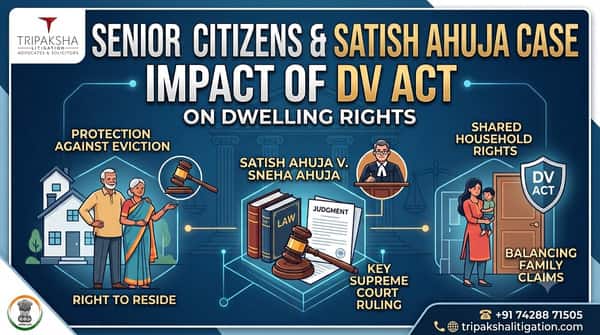
Senior Citizens & Satish Ahuja Case Impact of DV Act
Legal Articles

Senior Citizens & Satish Ahuja Case: Impact of DV Act

The Satish Ahuja v. Sneha Ahuja judgment expanded the meaning of a “shared household” under the Domestic Violence Act, allowing residence claims in certain properties owned by a husband’s relatives, including parents. This article examines how that interpretation can affect senior citizens’ property rights, peaceful possession, eviction proceedings, and protection under the Senior Citizens Act, while highlighting the need to balance women’s residence rights with the dignity and security of elderly homeowners.

Senior Citizens & Satish Ahuja Case: Impact of DV Act Read Post »

Can You Sue an Insurance Company in India 2026 Guide
Legal Articles

Can You Sue an Insurance Company in India? Complete Legal Guide 2026

Policyholders in India can challenge an insurance company for wrongful claim rejection, unreasonable delay, underpayment, unfair exclusions, or deficiency in service. Depending on the dispute, remedies may be available through the Insurance Ombudsman, Consumer Commission, Civil Court, or Commercial Court. Choosing the correct forum, acting within the limitation period, and preserving policy documents, claim records, survey reports, correspondence, and other evidence are crucial before starting legal proceedings.

Can You Sue an Insurance Company in India? Complete Legal Guide 2026 Read Post »

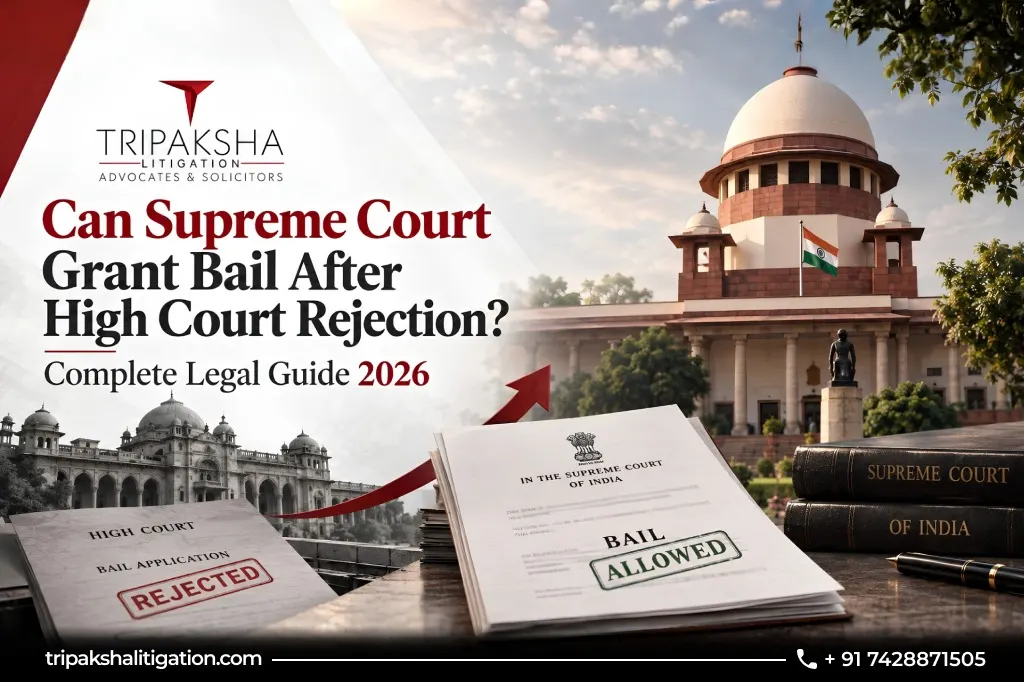
Can Supreme Court Grant Bail After High Court Rejection 2026
Legal Articles

Can Supreme Court Grant Bail After High Court Rejection? Complete Legal Guide 2026

The Supreme Court can grant regular or anticipatory bail even after the High Court has rejected it, usually when approached through an SLP under Article 136 of the Constitution. However, bail is not automatic. The Court considers factors such as length of custody, completion of investigation, filing of the chargesheet, trial delay, cooperation of the accused, risk of witness interference, and errors in the High Court’s reasoning. A strong challenge should explain specifically why the High Court’s refusal requires Supreme Court intervention.

Can Supreme Court Grant Bail After High Court Rejection? Complete Legal Guide 2026 Read Post »

Can You Sue Police for Illegal Detention in India 2026 Guide
Legal Articles

Can You Sue Police for Illegal Detention? Complete Legal Guide 2026

Illegal police detention in India can violate the fundamental right to personal liberty under Articles 21 and 22 of the Constitution. Depending on the circumstances, a person may seek habeas corpus, constitutional compensation, civil damages for false imprisonment, or action against responsible officials. The legality of detention depends on factors such as lawful authority, production before a Magistrate within the required period, compliance with arrest safeguards, and release after a binding court order. Preserving arrest records, court orders, CCTV footage, and other evidence is crucial.

Can You Sue Police for Illegal Detention? Complete Legal Guide 2026 Read Post »

Zero FIR In India Can It Be Filed At Any Police Station 2026
Legal Articles

Can A Zero FIR Be Filed Anywhere In India? Complete Legal Guide 2026

A Zero FIR can be registered at any police station in India when the complaint discloses a cognizable offence, even if the incident occurred outside that police station’s territorial jurisdiction. Under Section 173(1) of the BNSS, police cannot refuse registration solely because the offence occurred elsewhere. After registration, the FIR can be transferred to the police station having jurisdiction. If police refuse, the complainant can approach the Superintendent of Police and, if necessary, the Magistrate.

Can A Zero FIR Be Filed Anywhere In India? Complete Legal Guide 2026 Read Post »

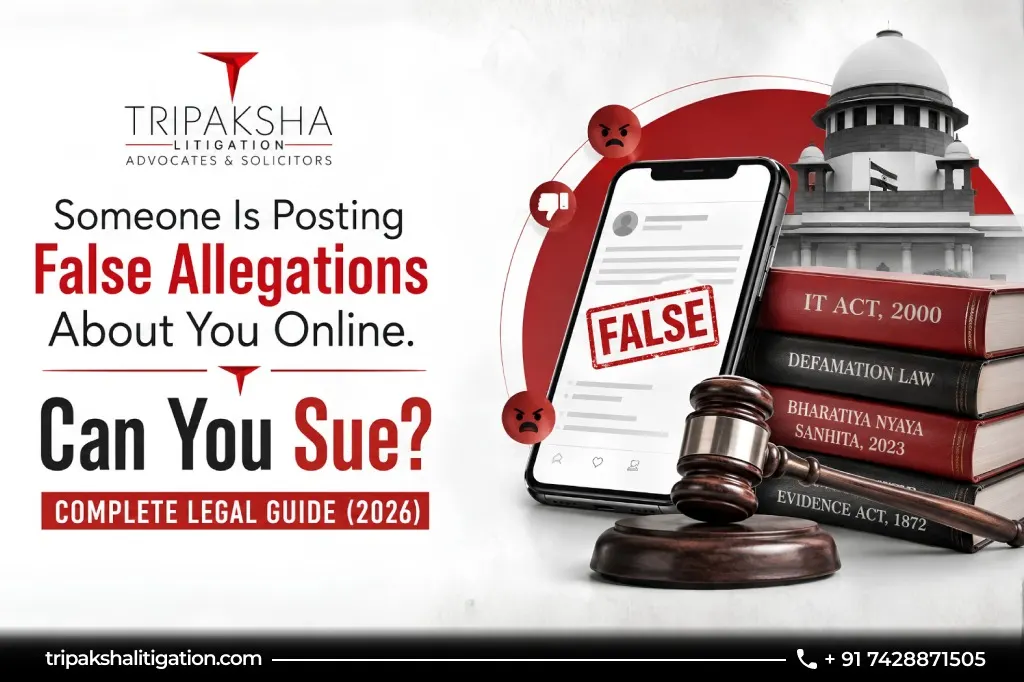
False Allegations Online Can You Sue For Defamation In India
Legal Articles

Someone Is Posting False Allegations About You Online. Can You Sue? Complete Legal Guide 2026

False allegations posted online can seriously harm a person’s reputation, career, business, and personal relationships. Indian law provides remedies when defamatory statements are published through social media, websites, online reviews, messages, or other digital platforms. Affected individuals may consider civil and criminal remedies, injunctions, damages, takedown requests, and legal notices depending on the circumstances. Preserving screenshots, URLs, dates, account details, and other digital evidence is important before taking legal action.

Someone Is Posting False Allegations About You Online. Can You Sue? Complete Legal Guide 2026 Read Post »

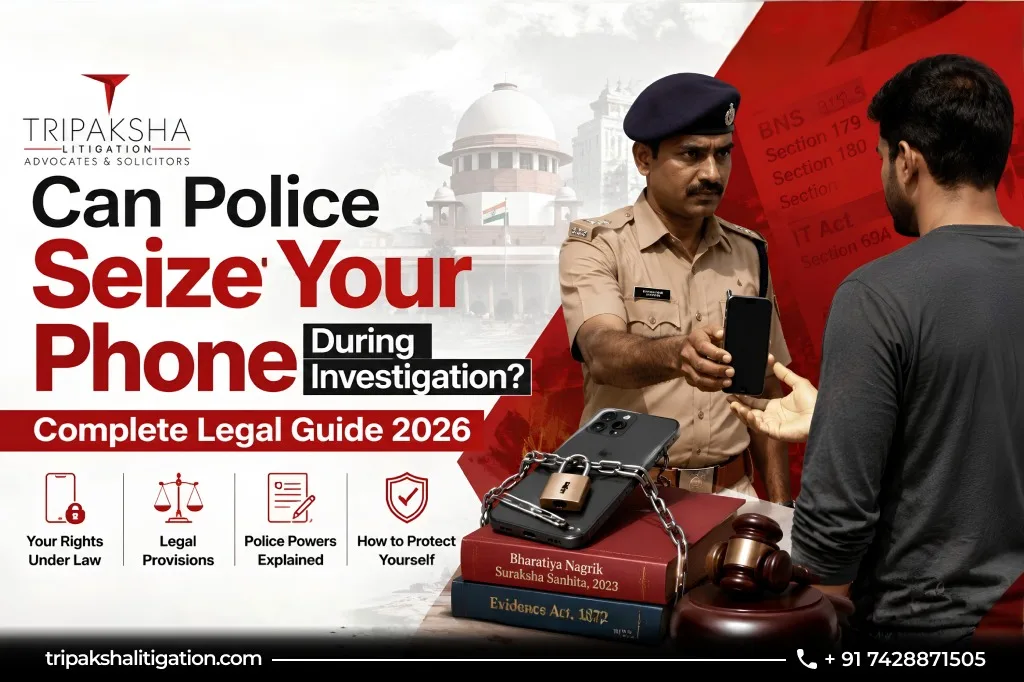
Can Police Seize Your Phone Legal Rights & Rules 2026
Legal Articles

Can Police Seize Your Phone During Investigation? Complete Legal Guide 2026

Police in India can seize a mobile phone during an investigation when there is a lawful investigative basis, but seizure, searching the phone’s contents, demanding passwords, and retaining the device are separate legal issues. The BNSS provides procedural safeguards for search and seizure, while Articles 20(3) and 21 protect against self-incrimination and safeguard privacy. If relevant digital evidence has already been preserved, courts may also permit the return of the physical device subject to appropriate conditions.

Can Police Seize Your Phone During Investigation? Complete Legal Guide 2026 Read Post »

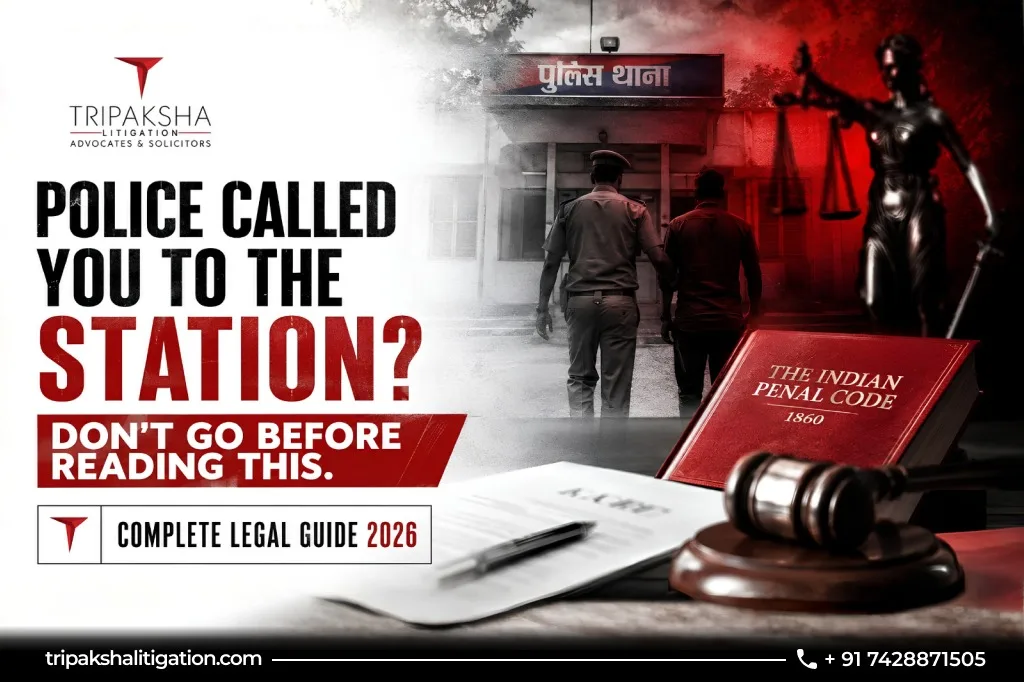
Police Called You To Station Know Your Rights Under BNSS
Legal Articles

Police Called You to the Station? DON’T Go Before Reading This

If police call you to a station in India, first confirm why you are being called, whether you are a witness or suspect, and whether a written notice has been issued. Under the BNSS, different procedures apply to witnesses and persons facing allegations. You also have protections against unnecessary arrest and self-incrimination. If questioning turns into arrest, you have the right to know the grounds of arrest, consult a lawyer, and be produced before a Magistrate within the legally prescribed period.

Police Called You to the Station? DON’T Go Before Reading This Read Post »

Scroll to Top