Legal Articles

File a Commercial Suit
Legal Articles

How to File a Commercial Suit in India

A commercial suit in India is used to resolve qualifying business and commercial disputes, such as those involving contracts, business transactions, partnerships, intellectual property, and commercial agreements. Filing requires identifying the proper Commercial Court, establishing jurisdiction, preparing the plaint and supporting documents, and paying the applicable court fee. Where required, pre-institution mediation must also be attempted before filing unless urgent interim relief is sought. Proper documentation, compliance with procedural rules, and timely filing are essential for pursuing the claim effectively.

How to File a Commercial Suit in India Read Post »
Steps Of Proceeding Before Commercial Court
Legal Articles

Steps Of Proceeding Before Commercial Court

Proceedings before a Commercial Court in India follow a structured and time-bound process designed to resolve business disputes efficiently. The case generally moves through filing of the commercial suit, service of summons, written statement, disclosure and inspection of documents, admission or denial, case management hearings, framing of issues, evidence, arguments, and judgment. Strict procedural timelines apply, particularly to filing the written statement, making proper documentation and timely compliance essential throughout commercial litigation.

Steps Of Proceeding Before Commercial Court Read Post »

Jurisdiction in Commercial Suits
Legal Articles

Jurisdiction in Commercial Suits

Determining jurisdiction in a commercial suit is essential because the case must be filed before a court legally authorised to hear the dispute. Jurisdiction generally depends on factors such as the specified value of the claim, nature of the commercial dispute, location of the defendant, place where the cause of action arose, and any valid jurisdiction clause in the contract. For intellectual property disputes, additional statutory rules may apply. Filing before the wrong court can result in the plaint being returned or transferred, causing unnecessary delay and expense.

Jurisdiction in Commercial Suits Read Post »

Types of Commercial Suits
Legal Articles

Types of Commercial Suits: A Simple Guide

Commercial suits in India cover a wide range of business and trade-related disputes governed by the Commercial Courts Act, 2015. Common cases involve business contracts, sale of goods and services, partnership and shareholder disputes, banking and finance, insurance, intellectual property, construction, franchising, distribution, and commercial property agreements. Whether a matter qualifies as a commercial dispute depends on the nature of the transaction, applicable legal definition, specified value, and jurisdiction, which also determine the appropriate Commercial Court for filing.

Types of Commercial Suits: A Simple Guide Read Post »

Waterfall Mechanism Under The Insolvency And Bankruptcy Act 2016
Legal Articles

Waterfall Mechanism Under The Insolvency And Bankruptcy Act 2016

The waterfall mechanism under Section 53 of the Insolvency and Bankruptcy Code, 2016 determines the order in which money from the liquidation of a corporate debtor is distributed among stakeholders. Insolvency and liquidation costs receive priority, followed by specified categories such as secured creditors who relinquish security, workmen, employees, unsecured financial creditors, government dues and remaining secured debt, other creditors, preference shareholders, and finally equity shareholders or partners. Understanding this priority order helps creditors assess their likely recovery when a company enters liquidation.

Waterfall Mechanism Under The Insolvency And Bankruptcy Act 2016 Read Post »

Comprehensive Guide to the Commercial Courts Act, 2015
Legal Articles

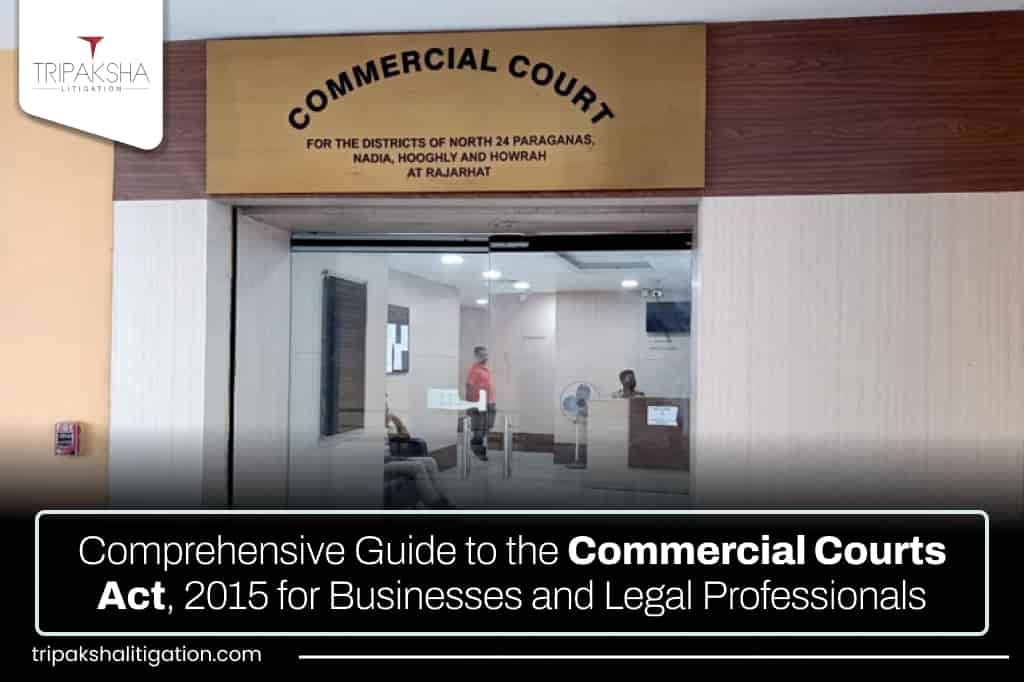
Comprehensive Guide to the Commercial Courts Act, 2015 for Businesses and Legal Professionals

The Commercial Courts Act, 2015 provides a specialised framework for resolving qualifying commercial disputes in India through Commercial Courts, Commercial Divisions, and Commercial Appellate Divisions. It covers matters such as business contracts, trade transactions, banking, insurance, construction, partnerships, intellectual property, and other commercial agreements, subject to applicable requirements. The framework emphasises pre-institution mediation, strict timelines, document disclosure, case management hearings, and streamlined procedures to make commercial litigation more efficient and predictable.

Comprehensive Guide to the Commercial Courts Act, 2015 for Businesses and Legal Professionals Read Post »

Legal Articles

5 Laws Indian Women Must Know About

Indian law provides women with important protections relating to domestic violence, workplace sexual harassment, dowry-related abuse, maternity benefits, and property or inheritance rights. These laws can provide remedies such as protection and residence orders, workplace complaint mechanisms, financial relief, maternity entitlements, and rights in family property where applicable. Understanding these basic legal protections can help women recognise unlawful conduct, preserve relevant evidence, approach the appropriate authority, and seek timely legal remedies when their rights are violated.

5 Laws Indian Women Must Know About Read Post »

Compulsory Pre-Litigation Mediation for Commercial Suits
Legal Articles

Compulsory Pre-Litigation Mediation for Commercial Suits: A Balanced Approach to Efficient Dispute Resolution

Pre-institution mediation is an important requirement under Section 12A of the Commercial Courts Act, 2015 for commercial suits that do not contemplate urgent interim relief. Before approaching the Commercial Court, parties are generally required to attempt mediation through the prescribed mechanism. The process aims to encourage early settlement, reduce litigation costs, preserve business relationships, and ease court workload. If mediation succeeds, the settlement receives legal enforceability; if it fails, the claimant may proceed with the commercial suit.

Compulsory Pre-Litigation Mediation for Commercial Suits: A Balanced Approach to Efficient Dispute Resolution Read Post »

Traffic Challan A Comprehensive Guide
Legal Articles

Traffic Challan: A Comprehensive Guide

A traffic challan is issued when a driver or vehicle owner is alleged to have violated traffic laws, such as speeding, signal violations, driving without required documents, improper parking, or failing to follow safety rules. Challans may be issued physically or electronically through the e-challan system. Vehicle owners should verify challan details, pay valid penalties within the prescribed process, and contest incorrect challans through the appropriate authority or court. Repeated or serious violations can lead to higher penalties and other legal consequences.

Traffic Challan: A Comprehensive Guide Read Post »

Legal Articles

Hindu Succession Act, 1956: An In-Depth Legal Analysis

The Hindu Succession Act, 1956 governs inheritance and succession among Hindus, Buddhists, Jains, and Sikhs in India in cases covered by the Act. It lays down rules for distributing property when a person dies without a valid will and defines the rights of different legal heirs. Following the 2005 amendment, daughters have the same coparcenary rights as sons in a Mitakshara Hindu joint family, including rights by birth in coparcenary property. The applicable inheritance share ultimately depends on the type of property, surviving heirs, family relationships, and circumstances of succession.

Hindu Succession Act, 1956: An In-Depth Legal Analysis Read Post »

Section 49 of the Registration Act
Legal Articles

Understanding Section 49 of the Registration Act, 1908: Effects of Non-Registration of Required Documents

Section 49 of the Registration Act, 1908 explains the legal consequences when a document that is compulsorily registrable is not registered. Such a document generally cannot affect the immovable property concerned or be received as evidence of the transaction it was required to record. However, the law allows limited exceptions, including its use as evidence in a suit for specific performance or for certain collateral transactions that do not themselves require registration. The provision highlights why proper registration is essential in property-related transactions.

Understanding Section 49 of the Registration Act, 1908: Effects of Non-Registration of Required Documents Read Post »

Confessions and Admissions in Indian Law An Examination of the Indian Evidence Act
Legal Articles

Confessions and Admissions in Indian Law: An Examination of the Indian Evidence Act

Admissions and confessions are important forms of evidence in Indian legal proceedings, but their admissibility depends on specific legal safeguards. An admission is a statement suggesting an inference about a relevant fact, while a confession generally involves an accused acknowledging guilt in a criminal matter. The law places important restrictions on confessions made to police officers, statements made in police custody, and confessions obtained through inducement, threat, coercion, or promise. Courts examine the voluntariness, relevance, circumstances, and evidentiary value of such statements before relying on them.

Confessions and Admissions in Indian Law: An Examination of the Indian Evidence Act Read Post »

Scroll to Top